Protein Myths Explained: The Truth About How Much You Really Need
Most common protein advice is outdated or wrong. This guide debunks the biggest protein myths — the 30g-per-meal absorption limit, kidney damage fears, the anabolic window, and more — with the actual science and free Fitlydoo calculators.
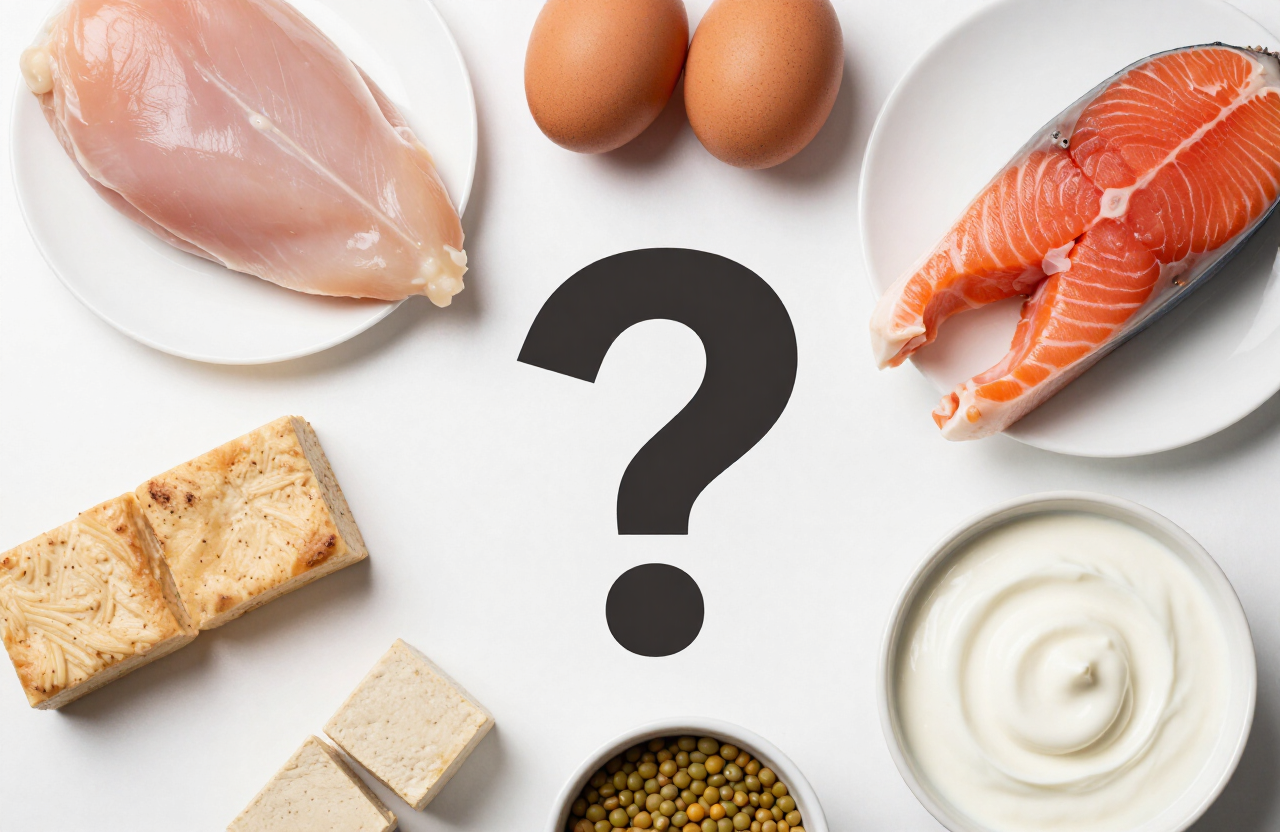
Most common protein advice is outdated or wrong. Your body can absorb far more than 30g of protein per meal, high-protein diets do not damage healthy kidneys, and the post-workout anabolic window is far wider than 10 minutes. What matters most is your total daily protein intake, spread reasonably across the day.
Protein is the most debated macronutrient in fitness. Walk into any gym and you will hear confident claims about absorption limits, kidney damage, and a magical post-workout window. The problem is that much of this advice comes from bodybuilding folklore, not science. This article separates the most stubborn protein myths from what the research actually shows — so you can stop overthinking and start eating effectively.
Myth 1: You Can Only Absorb 30 Grams of Protein Per Meal
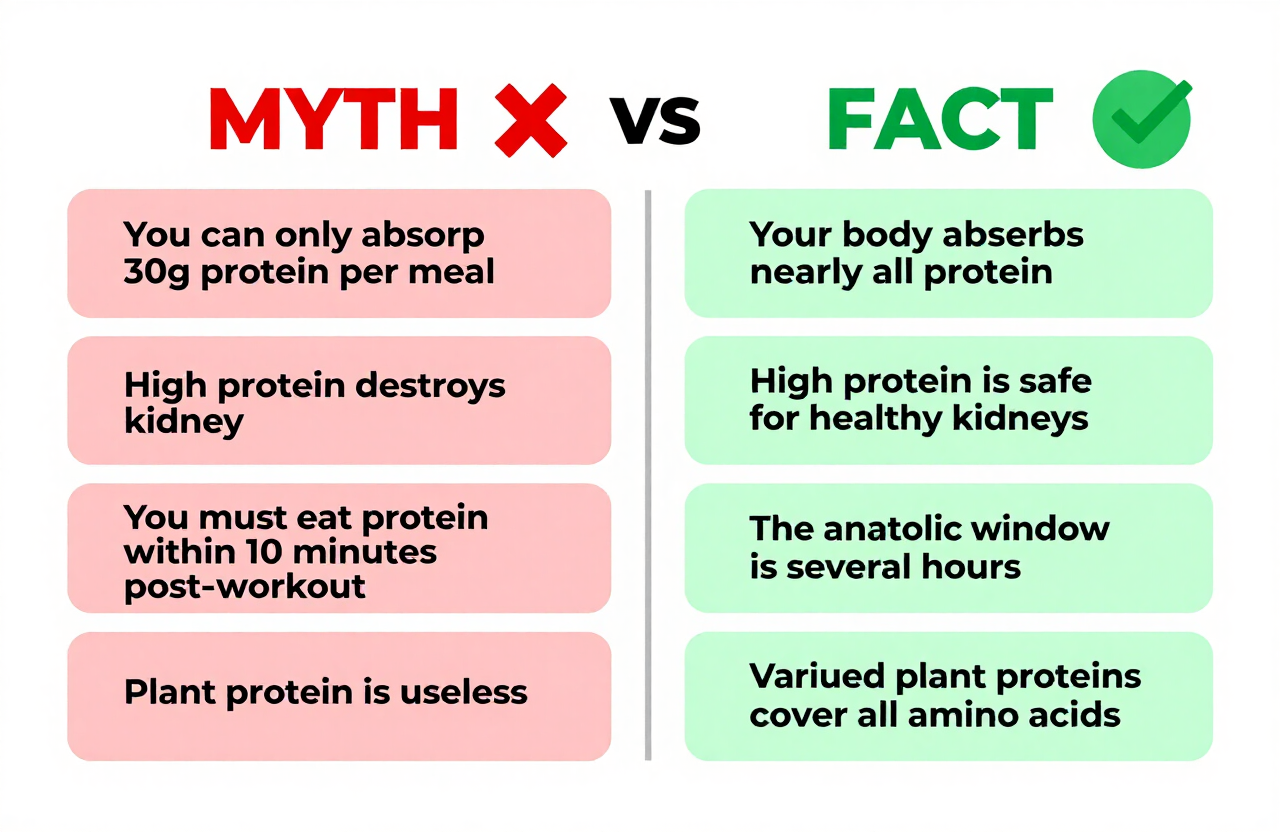
This is probably the most repeated protein myth of all. The claim is that any protein beyond 30 grams in a single meal is wasted, oxidized, or excreted. It sounds tidy, but it confuses two different things: absorption and muscle protein synthesis.
Your body absorbs virtually all the protein you eat, whether the meal contains 20 grams or 60 grams. The digestive tract does not slam shut at 30 grams. What is closer to the truth is that muscle protein synthesis — the process of building new muscle — may plateau at roughly 20–40 grams of high-quality protein per meal for maximizing the acute anabolic response. The rest is still used: for building other tissues, producing enzymes and hormones, or providing energy.
Expert Insight
A study in the Journal of the International Society of Sports Nutrition concluded that there is little evidence to support a strict per-meal protein ceiling. Total daily protein intake matters far more than how you slice it across meals.
👉 Use our Free Protein Calculator Here to find your daily target first — then distribute it across meals in whatever way fits your life.
Myth 2: High-Protein Diets Damage Your Kidneys
The idea that a high-protein diet harms your kidneys has been around for decades, and it is largely a myth for healthy people. Your kidneys are well equipped to handle the extra nitrogen waste from protein. Current evidence shows that high protein intake does not damage healthy kidneys.
The confusion comes from clinical guidance for people who already have chronic kidney disease. For them, a high-protein diet can accelerate damage, and they should follow their doctor's advice. But having kidney disease is very different from having healthy kidneys. If you are unsure about your kidney health — especially if you have diabetes or high blood pressure — get checked before significantly increasing your protein.
Important exception
If you have existing kidney disease or reduced kidney function, follow your healthcare provider's guidance on protein intake. This article addresses healthy adults.
Myth 3: You Must Drink a Protein Shake Within 10 Minutes of Working Out
The anabolic window — the idea that you must consume protein within minutes of finishing a workout or lose your gains — is one of the most overhyped concepts in fitness. The original claim suggested a window of 30–60 minutes. The reality is far more forgiving.
Research shows that total daily protein intake is the dominant factor in muscle growth, and the effective post-workout window is closer to several hours, not minutes. A 2017 meta-analysis published in the Journal of the International Society of Sports Nutrition found that protein timing had a small effect compared with total daily protein, and that effect largely disappeared when total protein was adequate.
What actually matters: eat enough protein across the day, and have a protein-rich meal within a few hours before or after training. If a shake right after your workout suits your schedule, great — but you are not losing muscle by waiting until your next meal.
Real-World Example
A lifter who trains at 6 PM and eats a protein-rich dinner at 7:30 PM builds muscle just as effectively as one who drinks a shake at 6:45 PM — as long as both hit their daily protein target.
Myth 4: Plant Protein Is Incomplete and Useless
It is often claimed that plant proteins are inferior because they lack one or more essential amino acids. The truth is more nuanced. Most individual plant foods are lower in one or more essential amino acids than animal foods, but a varied plant-based diet easily provides all nine essential amino acids across the day.
You do not need to combine proteins in every meal. Eating lentils, beans, whole grains, nuts, and seeds across the day covers the full amino acid range. Soy foods like tofu and tempeh are complete plant proteins on their own. The one consideration: plant proteins tend to be slightly less anabolic per gram than animal proteins, so people eating mostly plant-based may benefit from aiming toward the higher end of protein targets.
Myth 5: More Protein Always Means More Muscle
If some protein is good, more must be better, right? Not quite. Research consistently shows that muscle growth plateaus at roughly 1.6 to 2.2 grams of protein per kilogram of body weight per day when combined with resistance training. Going above 2.2 g/kg does not appear to build extra muscle for most people.
Eating excessive protein has trade-offs: it can displace the carbohydrates you need for training energy and the fats you need for hormones, and excess calories from any source can still lead to fat gain. The bigger levers for muscle growth are progressive overload in your training and a small calorie surplus — not endlessly more protein.
👉 Use our Free Macro Calculator Here to balance your protein, carbs, and fat so you gain muscle without overdoing any one macro.
How Fast Do Different Proteins Digest?
Not all proteins digest at the same speed, and understanding this helps explain why timing matters less than people think. Whey protein is fast-digesting, peaking in the blood within an hour, while casein forms a gel in the stomach and releases amino acids slowly over several hours.
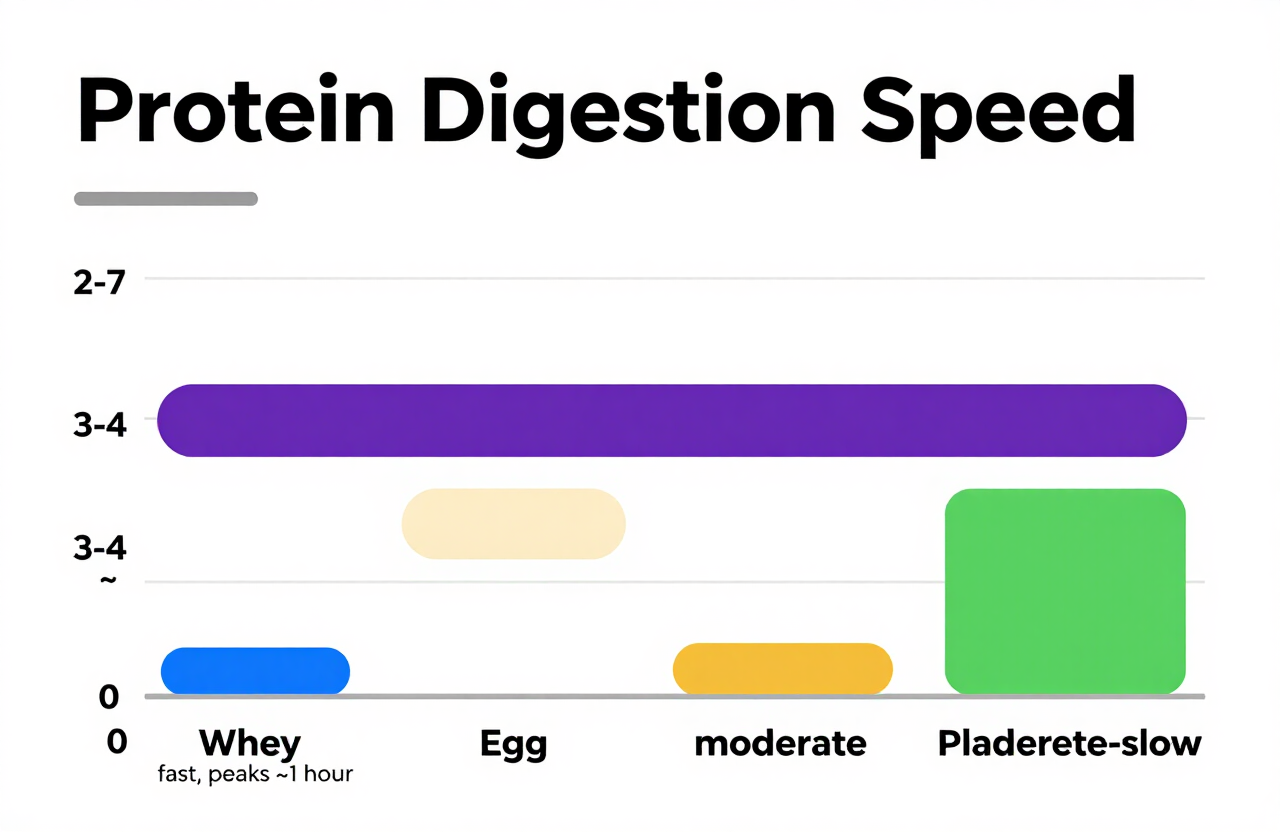
What this means in practice: a mix of fast and slow proteins across the day keeps amino acids available for muscle repair over many hours. But again, your total daily intake does most of the work. A chicken breast, eggs, or Greek yogurt are just as effective as a whey shake for hitting your target.
Myth 6: You Need Protein Powder to Build Muscle
Protein powder is a supplement, not a requirement. You can meet your daily protein target entirely with whole foods like chicken, fish, eggs, dairy, lentils, and tofu. A scoop of whey simply offers a convenient, cost-effective way to top up your intake on busy days or when your target is high. Use it if it helps; skip it if you do not.
How Much Protein Do You Actually Need?
Instead of chasing myths, focus on evidence-based targets based on your weight, activity, and goal:
- Sedentary adults: 0.8 g per kg of body weight (the RDA) — the minimum to prevent deficiency.
- Active adults: 1.2–1.6 g per kg.
- Muscle building: 1.6–2.2 g per kg, combined with resistance training.
- Weight loss (preserving muscle): 1.2–1.6 g per kg, sometimes higher in a large deficit.
- Older adults (65+): 1.0–1.2 g per kg to counter age-related muscle loss.
👉 Use our Free Protein Calculator Here to get a personalised target based on your weight, activity, and goal in seconds.
Summary: What Actually Matters
Most protein anxiety is built on myths. Your body absorbs the protein you eat, high-protein diets are safe for healthy kidneys, the anabolic window is hours wide, and plant proteins work fine when varied. What genuinely drives results is simple: hit your total daily protein target, spread it reasonably across meals, and pair it with consistent training. Everything else is noise.
Free, no sign-up. Turn your protein target into a full macro split across protein, carbs, and fat.
Frequently Asked Questions
Yes. Your body absorbs nearly all the protein you eat, regardless of meal size. The 30-gram limit confuses absorption with muscle protein synthesis, which may plateau at 20–40g per meal. The rest is still used by your body for other functions.
No, high protein intake does not damage healthy kidneys. However, if you already have chronic kidney disease, a high-protein diet can be harmful. Check with your doctor if you have kidney concerns before increasing protein.
The effective post-workout window is several hours, not minutes. Total daily protein intake matters far more than exact timing. Eating a protein-rich meal within a few hours before or after training is a sensible habit.
A varied plant-based diet provides all essential amino acids across the day. Plant proteins are slightly less anabolic per gram, so people eating mostly plant-based may benefit from aiming toward the higher end of protein targets.
Aim for 1.6–2.2 grams of protein per kilogram of body weight per day, combined with consistent resistance training. Going above 2.2 g/kg does not appear to build extra muscle for most people.
No. You can meet your protein target entirely with whole foods. Protein powder is a convenient supplement for busy days or high targets, but it is not required.
Sources & Further Reading
- 1.Journal of the International Society of Sports Nutrition. Position Stand: Protein intake for optimizing muscle hypertrophy
- 2.NIH Office of Dietary Supplements. Nutrient Recommendations: Protein
- 3.National Academies of Sciences, Engineering, and Medicine. Dietary Reference Intakes for Protein and Amino Acids
- 4.Centers for Disease Control and Prevention (CDC). Healthy Weight, Nutrition, and Physical Activity
Disclaimer
Informational, not medical advice
This content is for informational purposes only and is not medical advice. Always consult a healthcare professional before making dietary or lifestyle changes.
Related Articles
Understanding Your BMR (Metabolism)
What is my BMR, and what does it really say about your metabolism? This plain-language guide explains Basal Metabolic Rate, how to calculate BMR, the crucial BMR vs TDEE difference, why your BMR might seem low, and how to raise it — with free calculators to find your own numbers.
Read article NutritionHow Much Protein Do You Need Per Day?
Your daily protein needs depend on your weight, activity level, and goal — not a single universal number. Here is a plain-language guide to how much protein you really need per day, with examples, food tables, and a calculator to find your own target.
Read article NutritionHow Many Calories Should You Eat Per Day?
Your daily calorie needs depend on your age, sex, size, activity, and goal. Here is a plain-language guide to figuring out exactly how many calories you should eat — and how to use that number.
Read article